Val Bourne
Our March talk was well attended and enjoyed by all. Val Bourne is a well known and award-winning garden writer. She judges RHS floral and dahlia trials at Wisley and lectures widely. Val is a local, gardening organically at her home Spring Cottage in Cold Aston.
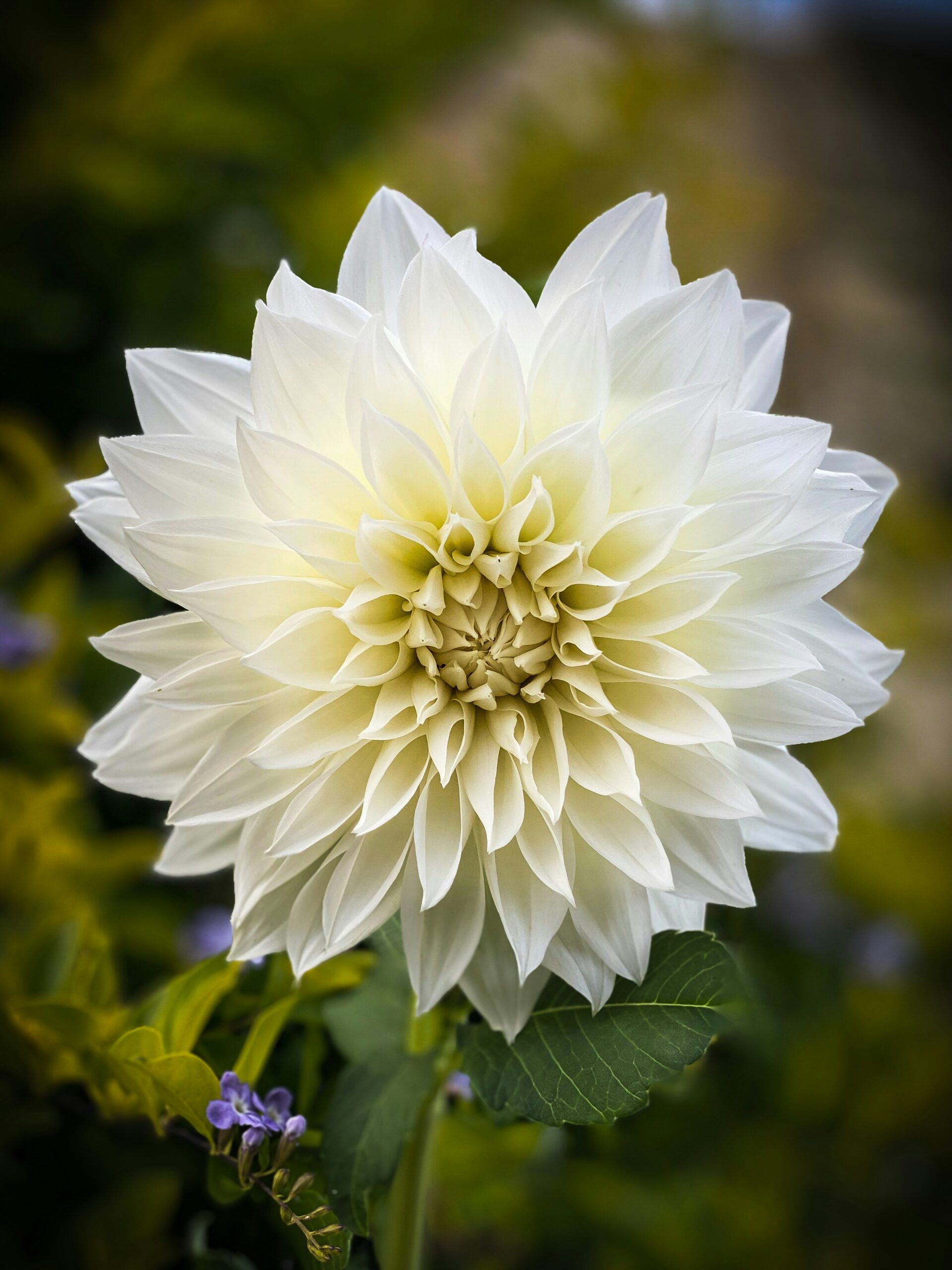
She told us she got into gardening through her grandmother and first fell in love with dahlias in the fifties when their vivid colours brightened a dull era. Mostly grown to exhibit at shows they were deeply unfashionable as garden plants in the sixties and seventies. About twenty years ago they were popularised by Sarah Raven and there are now a huge number of varieties.
At the RHS trials Val judges dahlias as garden plants and not from the exhibitor’s point of view as the good ones are given the Award of Garden Merit.
There is a large genetic pool of dahlias with 35 frost tender species. They are octoploids originally from Central America especially Mexico. They are high altitude plants and like evenly balanced nights and days and an ambient temperature of 70o F.
In 1570 Spain sent out plant hunters to search for useful food plants. At first the dahlia tubers were cooked following the success of potatoes. Unfortunately, they proved inedible! In 1789 some tubers were sent to the Botanic Garden in Madrid from where Lady Bute the wife of the British ambassador to Spain acquired some. By 1802 the Empress Josephine of France had a large collection.
Originally known as Georginas they were renamed Dahlias by Linnaeus after one of his pupils. Doubles and fancies were available by 1816 and thirteen classifications had appeared by the nineteenth century. In 1836 the RHS dahlia registry began.Initially they were only grown by the elite.
Val advised leaving a generous space in the garden around dahlias as they don’t enjoy being closely surrounded by other plants. Don’t plant them in the garden until June as cold nights inhibit growth. If a plant is not producing many tubers keep it in a small pot where it will feel stressed and produce more tubers. Very large tuber masses produce less flowers so try to divide them.
If you leave tubers in the ground over winter, cold weather can kill them. Lift them after the first frost. Val does not wash hers and only drains them upside down if they are very wet. She stores them in old compost in a tray in a heated greenhouse but any frost-free place like a garage will do. If it is really cold, protect with bubble wrap.
Dahlias do well in containers but don’t place them in a very hot position. Do not feed or they will only produce foliage. Start tubers into growth in March/April in large pots using John Innes No 2 in an unheated greenhouse. Pinch out the growing tips to bush out the plant. Gradually acclimatise plants before planting outside and water well until they are established. Cuttings can be taken including a small piece of the tuber or just stem cuttings leaving a small piece in situ to grow on again.
The following plant firms are recommended
Halls of Heddon
Riverside Bulbs
Peter Nyssen
Rose Cottage Plants
Some of the best places to see dahlias in a garden situation are Wollerton Old Hall, Great Dixter and Dyffryn.
Varieties recommended by Val:
Karma Chocolate
Karma Prospero
David Howard
Frank Kafka, a good cut flower
Lilac Time
Honka
Happy single series
Pulp Fiction